En vandflowmåler måler, hvor meget vand der løber gennem et rør. Det er hele opgaven, og derfor ser valget enklere ud, end det er. Seks teknologier løser den opgave på helt forskellige måder, og det forkerte valg fejler i stilhed: Den måler fint den første dag, men driver, sætter sig fast eller holder op med at registrere lavt flow seks måneder senere, når ingen holder øje.
Denne guide gennemgår de seks typer vandflowmålere, du reelt vil blive tilbudt, hvad hver især faktisk er god til, og de spørgsmål der indsnævrer listen til én. Den slutter med det spørgsmål, teknologien ikke svarer på.
De fem spørgsmål, der afgør det
Svar på disse, før du sammenligner teknologier. Som regel udelukker de fire af de seks muligheder, før du har kigget på et eneste datablad.
- Er vandet ledende? Almindeligt postevand og drikkevand er. Deioniseret, destilleret og ultrarent vand er ikke, og den ene kendsgerning udelukker en elektromagnetisk vandflowmåler fuldstændigt.
- Er vandet rent? Partikler, kalk og luftbobler er det, der slider et turbineleje og forvirrer en transittids-ultralydsmåling.
- Hvad er det laveste flow, du har brug for at se? Enhver vandflowmåler har et minimum, hvorunder den viser nul. En måler dimensioneret til en hovedforsyning vil aldrig se en eneste espresso.
- Hvor meget lige rør er der? Turbinemålere og magnetiske målere vil have et lige stræk før og efter, typisk ti rørdiametre opstrøms. I et tætpakket teknikrum er det ofte det, der reelt afgør valget.
- Hvor skal målingen hen? Til en skive, til en controller, eller helt væk fra stedet. Det spørgsmål bliver sprunget over, og det er det, der behandles til sidst.
Turbineflowmålere
En rotor sidder i strømmen, vandet får den til at dreje, og måleren tæller omdrejninger. Det er den ældste elektroniske tilgang og stadig den mest udbredte vandflowmåler i professionelt udstyr, fordi den er præcis i rent vand og koster en brøkdel af alternativerne.
Prisen er bevægelige dele. En turbine slides, og den kræver et minimumsflow for at overvinde rotorens inerti, så meget lavt flow registreres slet ikke. I vand med kalk eller partikler er det lejet, der fejler først.
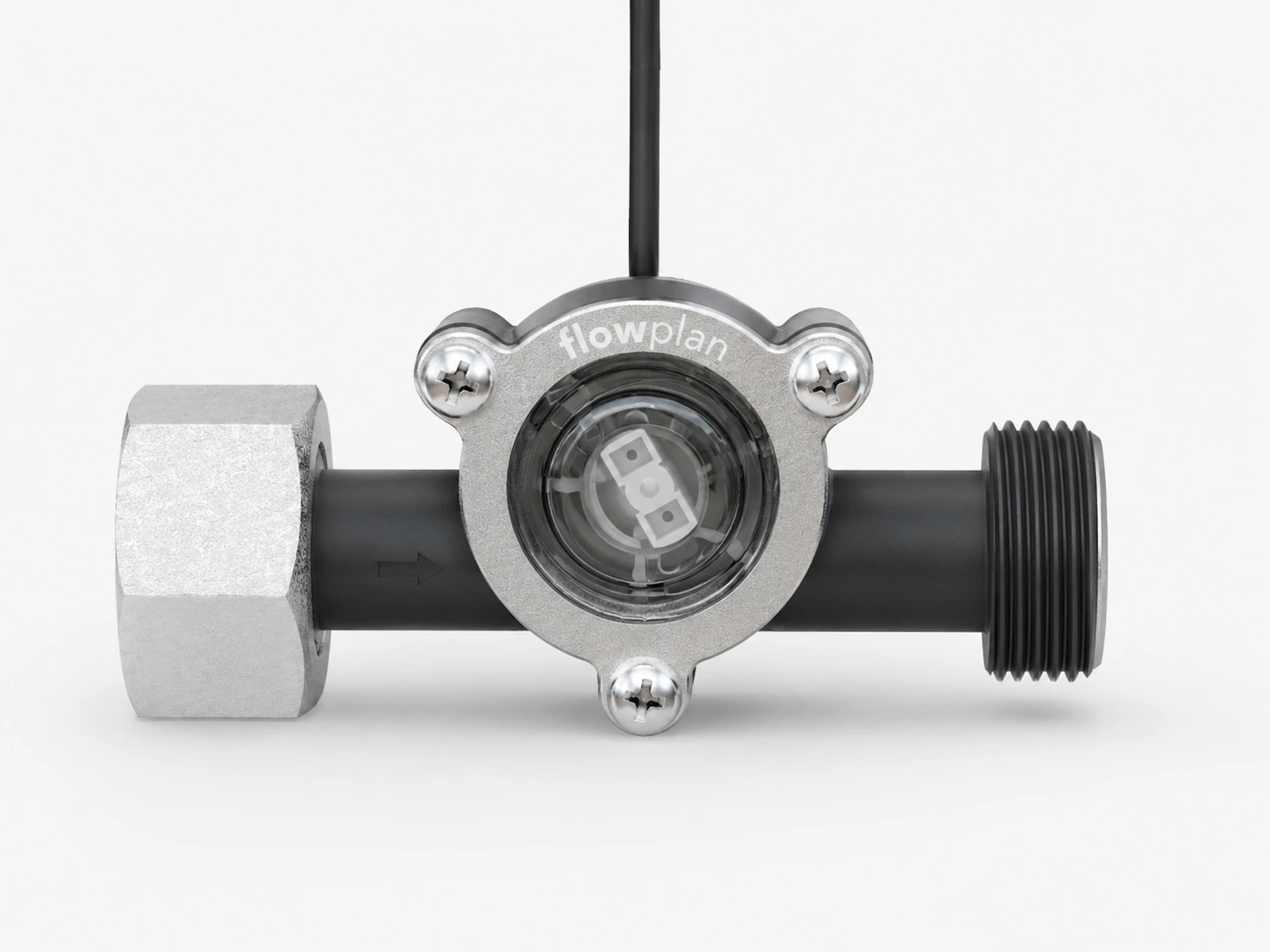
Det er et materialespørgsmål. Flowplans egen turbineflowmåler kører på en titaniumaksel i et forstærket hus, bygget til at sidde i årevis i en ledning, ingen kommer forbi.
Bedst til: rent drikkevand, et kendt flowområde og installationer i stort antal, hvor stykprisen betyder noget.
Ultralydsflowmålere
To transducere sender en puls gennem vandet og tager tid på den. Transittidsmodeller sammenligner rejsetiden med og mod strømmen for at udlede hastigheden. Doppler-modeller kaster i stedet lyden tilbage fra partikler og bobler.
Der er ingen bevægelige dele og intet trykfald, og clamp-on-versioner monteres uden på røret, så en ultralydsflowmåler kan sættes op helt uden at skære i ledningen. På et anlæg i drift er det det stærkeste argument for en.
Hagen er, at de to varianter vil have modsatte forhold. Transittid kræver ren væske. Doppler kræver partikler at reflektere på. Køber du den forkerte til dit vand, har du en dyr måler, der ingenting viser.
Den bruger også mere strøm. Transducerne sender og tager tid på pulser hele tiden, hvor en turbine blot skal have sine omdrejninger talt, og på en batteridrevet IoT-enhed, som de fleste er, afgør det, hvor længe den kører mellem besøgene. Selve måleren er også dyrere.
Bedst til: eftermontering, hvor det ikke er en mulighed at skære i røret, og ledninger hvor et trykfald er uacceptabelt.
Elektromagnetiske vandflowmålere
Et magnetfelt lægges på tværs af røret, og vand i bevægelse genererer en spænding, der er proportional med hastigheden. Faradays lov i et kabinet.
En magnetisk vandflowmåler, normalt forkortet mag-måler, har ingen bevægelige dele, intet der blokerer røret og intet trykfald, og den klarer beskidt vand og slam uden at kny. Den er arbejdshesten i den kommunale vandforsyning af netop de grunde.
Den har én absolut begrænsning: Væsken skal kunne lede strøm. Deioniseret vand, ultrarent vand, olier og de fleste opløsningsmidler virker ikke, uanset hvad salgsarket antyder.
Den er også kun præcis inden for sit arbejdsområde. Signalet er en bitte lille spænding, så ved lav hastighed drukner det i støj, røret skal løbe fuldt, og en belægning på elektroderne får målingen til at drive over tid. I en lille rørdimension ved de flow, en kaffemaskine eller en hane kører med, er lav hastighed normaltilstanden.
Bedst til: beskidt vand, store rørdimensioner og alle steder hvor præcision betyder noget, og væsken leder.
Coriolis-masseflowmålere
Vandet presses gennem et vibrerende rør, massen der bevæger sig igennem vrider røret en anelse, og vridningen måles. En Coriolis-måler måler masse direkte i stedet for volumen, så ændringer i temperatur, tryk og densitet påvirker den ikke.
Det er med god margin det mest præcise instrument på denne liste. Det er også det største og langt det dyreste. For vand, hvor densiteten er stabil og velkendt, betaler den præcision som regel for at løse et problem, du ikke har.
Bedst til: afregningsmåling, kemisk dosering og alle steder hvor der afregnes efter masse frem for volumen.
Svævelegemsmålere, eller rotametre
Et svævelegeme står i et konisk, lodret rør, og dets højde viser flowet. Ingen elektronik, og ofte slet ingen udgang. Det er et instrument, du aflæser med øjnene.
Billig, robust og umiddelbart forståelig, og derfor nægter de at dø. Ubrugelig hvis ingen står foran den, og den skal monteres lodret.
Bedst til: lokal visuel aflæsning på en ledning i teknikrummet, til lavest mulige pris.
Fortrængningsmålere
Måleren indfanger et kendt volumen i et kammer og tæller, hvor mange gange det fyldes og tømmes. Det er den eneste type her, der bliver mere præcis, jo lavere flowet er, og det gør den til standarden for viskøse væsker og meget små volumener.
For vand er prisen et reelt trykfald og bevægelige dele, der sidder direkte i strømmen.
Bedst til: viskøse væsker, meget lave flow og dosering.
De seks sammenlignet
- Turbine: billig og præcis i rent vand, men har bevægelige dele og en blind vinkel ved lavt flow.
- Ultralyd: intet trykfald og clamp-on er muligt, men den er dyr, strømkrævende og kræsen med vandets klarhed.
- Elektromagnetisk: præcis og ligeglad med beskidt vand, men væsken skal kunne lede strøm, og ved lavt flow mister den signalet.
- Coriolis: den mest præcise og måler masse, men den er stor og kostbar.
- Svævelegeme: langt den billigste, men kun visuel og kun lodret.
- Fortrængning: bedst ved lavt flow, til prisen af et reelt trykfald.
Det spørgsmål, teknologien ikke svarer på
Alle vandflowmålerne ovenfor løser den samme halvdel af problemet. Hver af dem fortæller, hvor meget vand der løb igennem. Ikke én af dem afgør, hvem der får det at vide.
I de fleste professionelle installationer er svaret ingen, i månedsvis ad gangen. Måleren har en skive, eller en pulsudgang koblet til en controller der logger lokalt, og tallet er kun virkeligt, når en tekniker tilfældigvis står foran det. Et filter kører langt ud over sin levetid, en maskine trækker det dobbelte af, hvad den burde, en ledning siver natten over, og vandflowmåleren registrerede det hele præcist og fortalte det ikke til nogen.
Det er en beslutning adskilt fra teknologien, og den er værd at træffe med vilje frem for ved en tilfældighed. Hvis målingen betyder noget mellem servicebesøgene, skal måleren kunne sende den, og det betyder enten en måler med egen forbindelse eller en transmitter, der aflæser den måler, der allerede sidder på ledningen.
Det er også derfor, en billig turbineflowmåler der rapporterer, i praksis som regel er mere værd end en dyr ultralydsmåler, der ikke gør.
Hvor Flowplan passer ind
Flowplan bygger en inline-flowmåler, en turbinetype med titaniumaksel, industrielle skruekoblinger og fødevaregodkendelse, i to størrelser der dækker 0,1 til 15 liter i minuttet. Den har slet ingen skive, med vilje. Målingen går til en Beam-transmitter og derfra direkte ind i software, så forbruget pr. maskine og pr. lokation kan aflæses, uden at nogen skal forbi.
Beam aflæser også tredjepartsmålere. Så hvis der allerede sidder en vandflowmåler på ledningen, og den passer til dit vand, er det ærlige svar som regel at beholde den og tilføje transmitteren i stedet for at udskifte det, der virker.